How to Plan a Successful Bathroom Remodel
How to Plan a Successful Bathroom Remodel
Planning a bathroom remodel can be exciting, especially when you want to improve your home's comfort, functionality, and appearance. Whether you're updating outdated fixtures, creating a modern walk-in shower, or redesigning your entire bathroom, having a clear plan can help you achieve the results you want.
Bathroom remodeling requires careful consideration of design, materials, ventilation, and building requirements. With the right preparation and professional guidance, you can create a bathroom that suits your lifestyle and adds lasting appeal to your home.
In this blog, we'll explore the essential steps to planning a successful bathroom remodel, from setting a budget to choosing materials and working with a professional contractor.
Table of Contents
Set Your Bathroom Remodeling Goals
Establish a Realistic Budget
Choose the Right Bathroom Layout
Select Durable Materials and Fixtures
Improve Lighting and Ventilation
Consider Storage and Accessibility
Understand Permits and Building Requirements
Hire the Right Bathroom Remodeling Contractor
Common Bathroom Remodeling Mistakes to Avoid
Transform Your Bathroom with Endurance General Contracting
1. Set Your Bathroom Remodeling Goals
Before starting your project, identify what you want to accomplish with your bathroom remodel. Understanding your priorities will help guide your design decisions and budget.
Consider whether you want to:
Replace outdated fixtures and finishes.
Improve storage and organization.
Install a modern walk-in shower.
Upgrade your bathtub or vanity.
Improve lighting and ventilation.
Make the bathroom more accessible.
Redesign the entire space.
Having clear goals from the beginning makes it easier to choose the right improvements and avoid unnecessary changes during construction.
2. Establish a Realistic Budget
Setting a budget is one of the most important steps in planning a bathroom remodel. Your total investment will depend on the bathroom's size, the materials you choose, labor requirements, and the extent of the renovation.
When creating your budget, account for:
Cabinets and vanities
Countertops and sinks
Flooring and wall tiles
Showers and bathtubs
Plumbing fixtures
Lighting and electrical work
Labor and installation
Permits, where required
It's also a good idea to reserve approximately 10–20% of your budget for unexpected expenses. Hidden plumbing problems, moisture damage, or necessary structural repairs can sometimes arise after work begins.
A realistic budget helps you prioritize essential upgrades while making informed decisions about optional features.
3. Choose the Right Bathroom Layout
A well-designed layout can make your bathroom more comfortable and functional. Even a small bathroom can feel more spacious when fixtures and storage are positioned thoughtfully.
Improve the Use of Available Space
Consider how you move through your bathroom and whether the current arrangement meets your needs. You may be able to improve functionality by changing the vanity size, updating the shower enclosure, or adding better storage.
Consider a Walk-In Shower
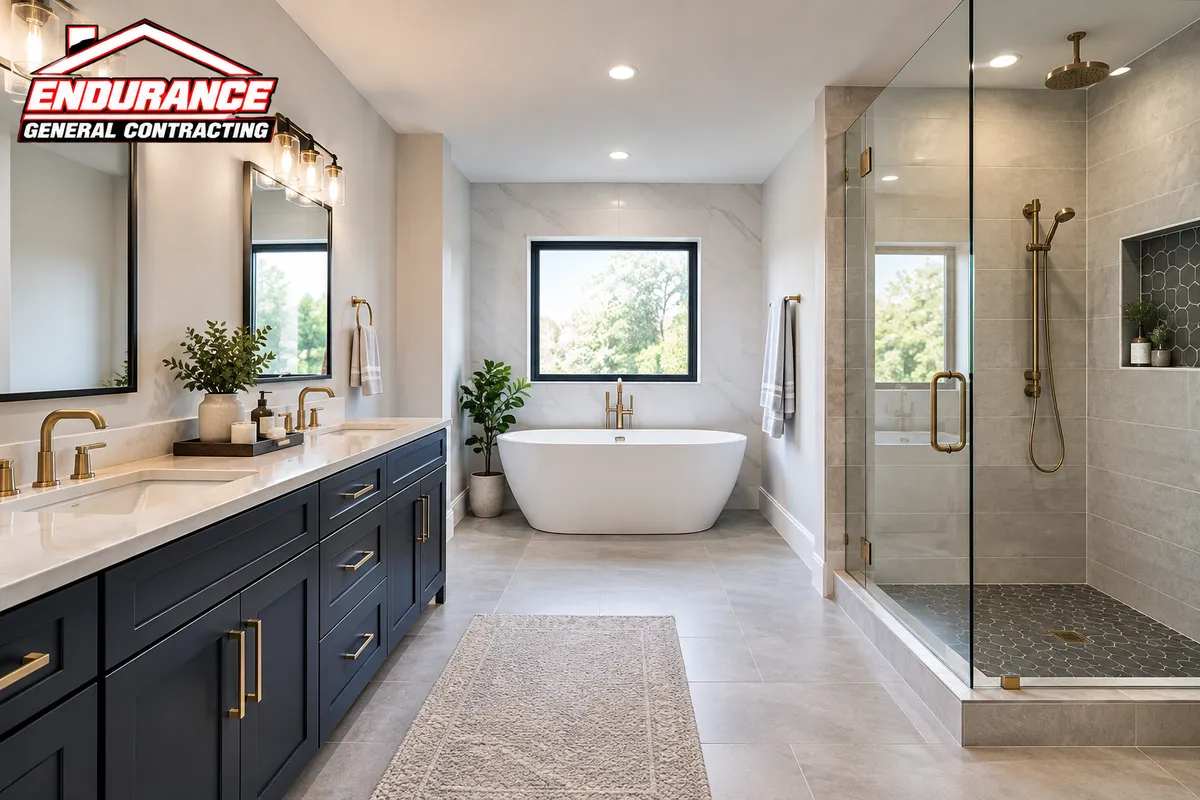
Walk-in showers can create a modern, open appearance. Glass enclosures, recessed niches, and carefully selected tiles can help make the shower area both attractive and practical.
Decide Whether to Keep Existing Plumbing Locations
Keeping your toilet, sink, and shower in their current locations may simplify construction. Moving plumbing fixtures can provide greater design flexibility, but it may also increase labor and material requirements.
Discuss your options with your contractor before finalizing your layout.
4. Select Durable Materials and Fixtures
Bathrooms experience frequent moisture, temperature changes, and daily use. Choosing appropriate materials is essential for maintaining the appearance and performance of your remodeled space.
Flooring
Porcelain and ceramic tiles are popular bathroom flooring options because they are durable and available in many designs. Choose flooring with suitable slip resistance for wet areas.
Countertops and Vanities
Quartz, granite, and other suitable countertop materials offer different appearances and maintenance requirements. Select a vanity that provides enough storage without making the bathroom feel crowded.
Shower and Wall Finishes
Choose finishes designed for bathroom environments. Proper waterproofing behind and around shower surfaces is essential to help prevent moisture from damaging the underlying structure.
Faucets and Fixtures
Modern faucets, showerheads, and hardware can enhance your bathroom's appearance while improving everyday convenience. Consider durability, ease of cleaning, and water efficiency when making your selections.
5. Improve Lighting and Ventilation
Lighting and ventilation are essential parts of a successful bathroom remodel. They influence the room's comfort, usability, and long-term maintenance.
Plan Effective Lighting
Combine different lighting types to make the bathroom more functional.
Ambient lighting: Provides general illumination throughout the room.
Task lighting: Improves visibility around mirrors and vanities.
Accent lighting: Highlights architectural details or decorative features.
Choose fixtures suitable for their intended bathroom locations and applicable electrical safety requirements.
Install Proper Ventilation
Bathrooms produce moisture from showers, baths, and everyday activities. Without adequate ventilation, excess humidity can contribute to condensation, mold, and mildew.
An appropriately sized exhaust fan that vents outdoors can help control moisture. Make sure the ventilation system is suitable for your bathroom's size and design.
6. Consider Storage and Accessibility
A practical bathroom should have enough storage for toiletries, towels, cleaning supplies, and everyday essentials.
Consider incorporating:
Vanity drawers and cabinets
Recessed medicine cabinets
Built-in shower niches
Floating shelves
Linen storage
Drawer organizers
If you want your bathroom to remain comfortable as your needs change, consider accessibility features such as grab bars, curbless showers, wider clearances, and easy-to-use fixtures.
Planning these details early can help you create a bathroom that is organized, comfortable, and easier to use.
7. Understand Permits and Building Requirements
Depending on the scope of your bathroom remodel and local regulations, permits may be required for certain plumbing, electrical, mechanical, or structural changes.
Before construction begins, determine which requirements apply to your project. Your contractor can help identify the necessary approvals and coordinate work with the appropriate professionals.
It's also important to address moisture protection, electrical safety, ventilation, and applicable building codes during the planning stage.
Taking care of these details early can help prevent delays and avoid problems later.
8. Hire the Right Bathroom Remodeling Contractor
Choosing the right contractor can make a significant difference in the quality and organization of your remodeling project.
Before making a decision, consider the following factors.
Experience and Expertise
Look for a contractor with experience in bathroom remodeling and projects similar to yours. Ask about their approach to layout planning, material selection, and installation.
Communication
A good contractor should explain the remodeling process, discuss your expectations, and keep you informed about progress and potential challenges.
Detailed Estimates
Request a written estimate that outlines the project scope, materials, labor, and any relevant exclusions. This makes it easier to compare proposals and understand what is included.
Scheduling and Project Management
Discuss the expected timeline, work schedule, and coordination of different trades before construction begins.
Working with a qualified professional can help you navigate the remodeling process with greater confidence.
9. Common Bathroom Remodeling Mistakes to Avoid
Even a carefully planned remodel can encounter challenges if important details are overlooked.
1. Ignoring Waterproofing
Inadequate waterproofing can lead to leaks, moisture damage, and expensive repairs. Ensure wet areas are properly prepared and protected.
2. Choosing Style Over Functionality
Attractive finishes are important, but your bathroom should also provide comfortable movement, practical storage, and convenient access to fixtures.
3. Underestimating the Budget
Remember to account for labor, materials, permits where required, and unexpected repairs. A contingency fund can help you manage unforeseen expenses.
4. Overlooking Ventilation
Poor ventilation can allow excess humidity to build up. Include an effective ventilation plan as part of your remodel.
5. Changing Designs During Construction
Frequent changes can affect material orders, scheduling, and project costs. Finalize your major design choices before work begins whenever possible.
6. Choosing Materials Without Considering Maintenance
Some materials require more cleaning or maintenance than others. Consider how much time you're willing to spend maintaining your bathroom before making final selections.
10. Transform Your Bathroom with Endurance General Contracting
A successful bathroom remodel starts with a clear vision, thoughtful planning, and the right team. Whether you're updating an outdated bathroom, improving storage, installing a walk-in shower, or completely redesigning the space, careful preparation can help you achieve a result that fits your home and lifestyle.
Endurance General Contracting specializes in bathroom remodeling, helping homeowners create functional and attractive spaces with attention to quality workmanship and practical design.
From selecting materials and improving layouts to coordinating installation and finishing details, our team is committed to helping bring your remodeling vision to life.
Ready to plan your bathroom remodel? Contact Endurance General Contracting today to discuss your project and request an estimate.